
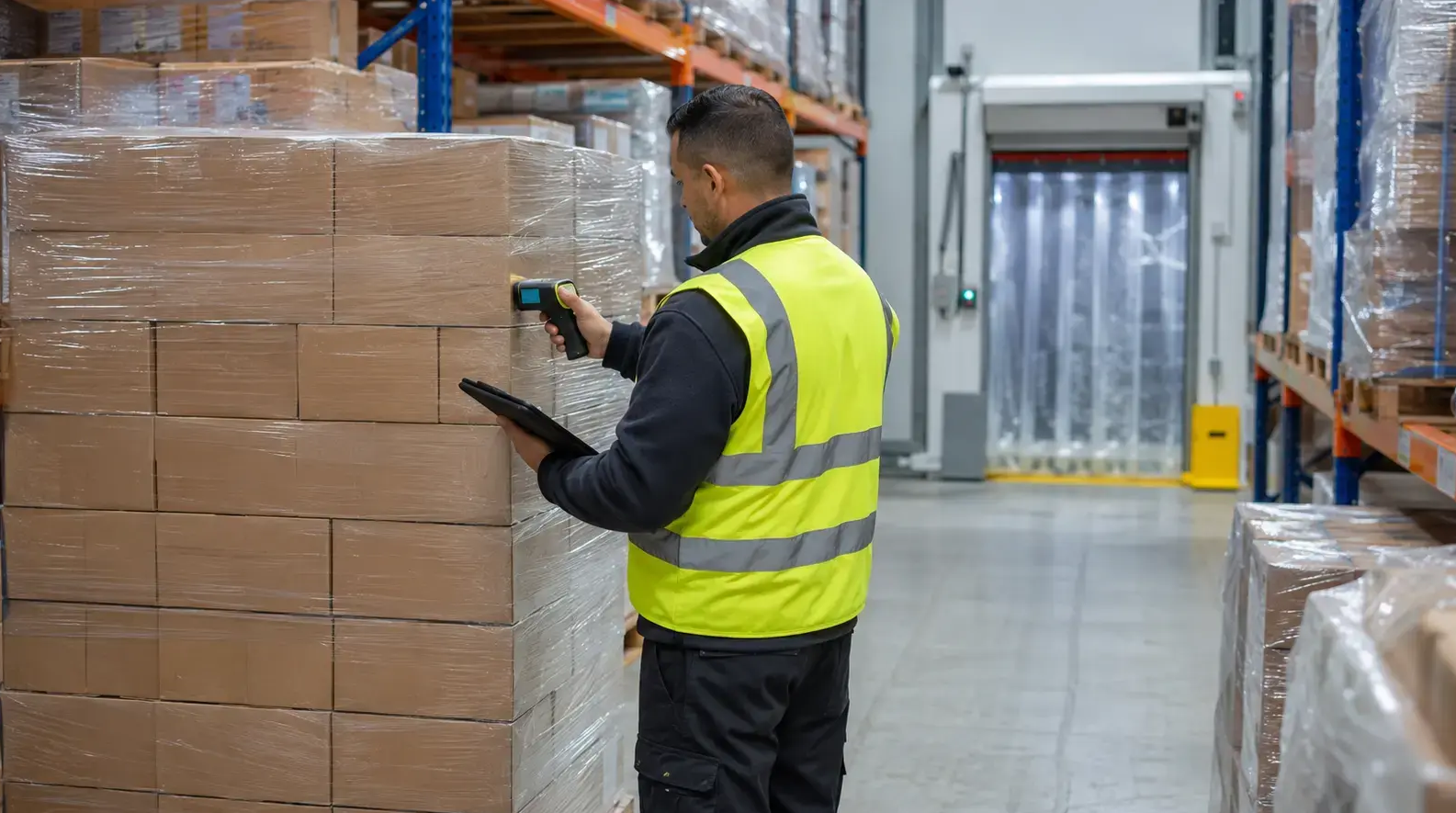
Food Quality Assurance in Warehousing:
What FMCG Brands Should Expect
When you hand stock over to a warehouse, you’re handing over more than pallets and cartons. You’re relying on that provider to protect product integrity, maintain the right storage conditions, keep accurate records and prepare your stock correctly for dispatch.
For food, beverage and FMCG brands, that puts food quality assurance firmly inside the warehousing operation.
Australian food safety standards cover areas including the receipt, storage, packaging and transportation of food. Products need to be protected from contamination and, where temperature control is required, stored under suitable conditions.
Meeting those requirements is the starting point. You also need to know what happens to your stock from the moment it reaches the receiving dock until it leaves for a retailer, distributor or customer.
Food Safety in a Warehouse Starts at Receiving
The receiving dock is the first chance to catch a problem that may have happened before your stock reached the warehouse.
A shipment could arrive with damaged cartons. The quantity received may not match the paperwork. Batch or date information could be wrong. Chilled or frozen stock may arrive outside its agreed temperature range.
If those problems are picked up before the stock enters inventory, your team has a much clearer path to deciding what happens next.
What to Expect When Your Stock Arrives
For food products, inbound quality checks may cover:
- shipment details against the relevant paperwork and product specifications
- packaging condition and any signs of contamination or damage
- labels, batch codes, lot numbers and expiry dates
- temperatures for chilled and frozen products
- discrepancies that need to be recorded before stock enters inventory
- stock that needs to be isolated or held for further investigation
Food Standards Australia New Zealand (FSANZ) also identifies contamination protection, product identification and temperature control as considerations when receiving food.
At Pakval, inbound shipments are checked against specifications before entering inventory. Where something doesn’t match the agreed specification, the stock can be held while the discrepancy is documented and discussed with the customer.
You want to know about a problem before affected product becomes mixed into available stock or continues towards a retailer.
Storage Conditions Go Beyond the Thermostat
Temperature gets plenty of attention in food warehousing, for good reason. But setting a warehouse to the right temperature doesn’t cover everything involved in protecting food products.
Storage also needs to account for contamination risks, cleaning, pest control, packaging condition and the way different products are separated and handled.
Different Products Need Different Storage Conditions
There isn’t one warehouse temperature that works for every FMCG product.
Frozen food, chilled products, ambient grocery lines and temperature-sensitive confectionery can all need different conditions. Your warehouse needs to match those conditions to the products you sell.
Pakval provides multi-temperature warehousing for food, beverage and FMCG products, covering frozen, chilled, ambient and confectionery storage.
It is also worth looking beyond your current range.
You may deal mainly in ambient grocery products today, then add a chilled line as the brand grows. If your warehouse cannot handle both, you may end up adding another provider, another inventory system and another set of QA processes.
Traceability Should Follow Stock Through the Warehouse
Detailed traceability often sits in the background when everything is running normally.
Its value becomes obvious when you need to investigate a particular batch.
You may need to establish when the stock arrived, which lot numbers were received, where the product was stored and whether any of it has already been dispatched. Those answers shouldn’t depend on someone piecing together old spreadsheets and email threads.
Batch and Lot Records Need To Be Usable
Good warehouse traceability should let you follow stock through its movements and keep the records you may need later.
Depending on your products and QA requirements, records can include:
- batch and lot numbers
- expiry or date-code information
- temperature logs
- inventory movements
- receiving records
- picking and dispatch information
- QA holds and releases
- damage or discrepancy records
Pakval maintains batch numbers, temperature logs, handling documentation and dispatch records as part of its quality assurance processes. Those records can support customers during audits, recalls and regulatory queries.
When you compare warehouse providers, ask what is recorded automatically, what relies on manual input and how quickly your QA team can retrieve the information.
A system that captures plenty of data but takes days to produce a usable batch history may still cause problems when you need answers quickly.
HACCP-Certified Warehousing Should Show Up in Daily Operations
Certification is an obvious place to start when assessing a food warehouse. It shouldn’t be the end of the conversation.
A HACCP-certified warehouse should have food safety controls built into normal operations. You should be able to see how those controls affect receiving, storage, handling, cleaning, traceability and corrective action.
Instead of stopping at “Are you HACCP certified?”, ask the provider to explain how its HACCP system changes the way your stock is managed.
That conversation may cover receiving inspections, temperature monitoring, pest control, product holds, cleaning procedures, staff training and record keeping.
Where SQF Certification Fits
SQF has a Food Safety Code specifically for Storage and Distribution. It applies to operations storing and distributing products including chilled, frozen, dry and shelf-stable foods.
For an FMCG brand, SQF certification can be relevant when you assess a warehousing provider.
Pakval operates HACCP, SQF and WQA-certified facilities with QA processes covering inbound, in-process and outbound activity.
Certification gives you a useful starting point. The next step is seeing how the underlying controls work while your stock is in the facility.
QA Continues While Your Stock Is in Storage
Inbound inspection is only one part of food quality assurance.
Your stock might spend days, weeks or months in a warehouse. During that time, pallets may be moved, orders picked, inventory replenished and stock prepared for dispatch.
Each movement needs to happen without losing sight of the product, batch and storage requirements attached to it.
QA During Everyday Warehouse Handling
Once stock is in storage, QA becomes part of everyday handling. Warehouse practices, batch tracking, temperature monitoring where required and inventory accuracy all need to work together.
Barcode scanning and SKU verification can help prevent the wrong product being dispatched, while damaged or non-conforming stock needs to be identified and kept out of the normal picking process.
The warehouse management system (WMS) also needs to agree with what is happening on the warehouse floor.
If an operator finds damaged stock, for example, recording the issue in the WMS is only half the job. The affected product also needs to be physically controlled so it cannot accidentally return to available inventory.
The same principle applies to holds, releases, stock rotation and other QA decisions. Your digital records and physical stock should tell the same story.
Retailer Requirements Add Another Layer
Food safety standards tell you a lot about how product needs to be handled. Retailers can add their own operational requirements on top.
Large retailers may specify how pallets are built, how cartons are labelled, which product information needs to appear on labels and what documentation must travel with the order.
A product can be perfectly safe and still be rejected or delayed because it doesn’t meet the retailer’s receiving requirements.
This is where FMCG warehouse experience becomes useful.
At Pakval, pre-dispatch QA can include checks against supermarket requirements such as GS1 labelling, pallet standards and outbound documentation. The QA program also covers investigation and root cause analysis where recurring errors, damages or rejections occur.
When Stock Falls Outside Specification
No warehouse can credibly promise that every pallet will arrive in perfect condition, and that every process will run without an exception.
The real test is what happens when something does go wrong.
A shipment might arrive damaged. A temperature reading could move outside the agreed range. An operator may find the wrong label on a carton. A retailer could report repeated damage to a particular SKU.
Your warehouse needs a defined way to identify the problem, control the affected stock and record what happens next.
Controlling Non-Conforming Stock
When you assess a provider, ask how it deals with stock that cannot continue through the normal workflow.
You’ll want to understand:
- how affected stock is identified and physically separated
- who gets notified and what information they receive
- whether stock can be placed on hold in the WMS
- who has authority to release it
- how corrective actions are recorded
- what happens when the same problem occurs more than once
You should know what happened, which products are affected and what happens next.
That becomes particularly useful when your own QA team needs to make a decision quickly rather than waiting for several people to piece together the history.
Warehouse Records Should Be Ready When Your QA Team Needs Them
If your business is audited, your warehouse may form part of the evidence trail.
Your team could be asked for receiving records, temperature logs, batch histories, stock movements or dispatch information. The easier those records are to retrieve, the easier it is to respond.
Problems tend to appear when record keeping is treated as something to prepare for an audit rather than something maintained during normal operations.
Pakval maintains QA documentation across its facilities and can provide operational records to customers where they are needed for audits, recalls or regulatory queries.
When you compare providers, ask to see how this works. Find out how records are stored, who can retrieve them and what information your own QA team can access.
A Food-Grade Warehouse Needs to Fit the Rest of Your Supply Chain
Warehouse QA doesn’t happen in isolation.
Your product arrives from somewhere and leaves for somewhere else. While it is under warehouse control, it may also need repacking, relabelling, date coding or another value-added process.
Every time stock moves to a separate facility, another hand-off enters the process. That may mean another transport movement, another set of records and another change in responsibility.
For some brands, keeping more of those activities within the same operation can make stock movements and QA records easier to follow.
Pakval connects warehousing with services including repack and thaw and delivery under its QA program.
You won’t necessarily need every service. What counts is whether the warehouse setup matches the way your products move.
If stock regularly has to leave one site to be relabelled, repacked or prepared for retail before moving again, it is worth looking at whether those extra movements can be removed.
Questions Worth Asking Before You Choose a Food Warehouse
Certifications tell you part of the story. A conversation about the actual journey your stock takes will tell you much more.
Before appointing a warehouse provider, ask them to walk you through receiving, storage, picking and dispatch using one of your products as the example.
Useful questions include:
- Which food safety standards and certifications apply to this facility?
- How will our incoming stock be inspected?
- How do you manage frozen, chilled, ambient and temperature-sensitive products?
- What happens if a shipment arrives outside specification?
- Can you trace inventory by batch and lot?
- How are QA holds managed in the WMS and on the warehouse floor?
- What controls are used during picking and dispatch?
- How do you manage retailer-specific requirements?
- Which records can our QA team request or access?
- How do you investigate recurring warehouse or dispatch problems?
- Which additional processes can be completed without moving stock to another facility?
Specific answers are what you are looking for.
If a provider talks extensively about “quality” but cannot explain what its team checks, records or does when something goes wrong, you still have questions to ask.
Food Quality Assurance Continues Beyond Manufacturing
Your food safety and quality responsibilities don’t stop when finished product leaves the manufacturing site.
The warehouse is part of the chain.
You need the right storage environment, reliable traceability, documented processes and people who understand what food and FMCG products require. You also need a clear process for stock that falls outside specification.
Pakval provides multi-temperature warehousing and food quality assurance for food, beverage and FMCG brands, with HACCP, SQF and WQA-certified operations across Melbourne, Sydney, Brisbane and Adelaide.
If you’re reviewing your current 3PL or looking for a food-grade warehouse for a growing product range, speak to Pakval about your warehousing requirements.
Frequently Asked Questions
Can a food warehouse store food and non-food products in the same facility?
It can, provided the facility has suitable controls to protect food from contamination. If your warehouse stores other product categories, ask how food is separated from chemicals and other potential contamination sources, whether handling equipment is shared and how cleaning and storage procedures are managed across different product types.
What information should be transferred when changing food warehouse providers?
The exact requirements depend on your products and QA system, but the handover may include inventory balances, batch and lot data, expiry dates and relevant QA records. Depending on the products involved, you may also need historical temperature or movement records. Agree on the data format and cut-off process before the move so there is less to reconcile afterwards.
How does warehouse traceability support a food product recall?
During a recall or withdrawal, you may need to identify affected stock by batch or lot and establish where it has gone. Warehouse traceability can help you determine how much affected product remains in storage and which orders have already been dispatched, giving your team the information needed to manage the next stage of the response.
Should you visit a food warehouse before appointing a 3PL?
A site visit can give your QA and supply chain teams a much better view of how the warehouse operates than a capabilities document alone. It gives you an opportunity to look at storage areas, product separation, receiving and dispatch practices and how non-conforming stock is controlled while discussing the processes relevant to your products.
When should your QA team get involved in selecting a warehouse provider?
Bring QA into the process before the provider is appointed. Storage conditions, traceability, certification, documentation and retailer requirements may all affect whether a warehouse is suitable. Involving QA alongside operations and commercial teams early can uncover requirements that would be much harder to address after inventory has already moved.