
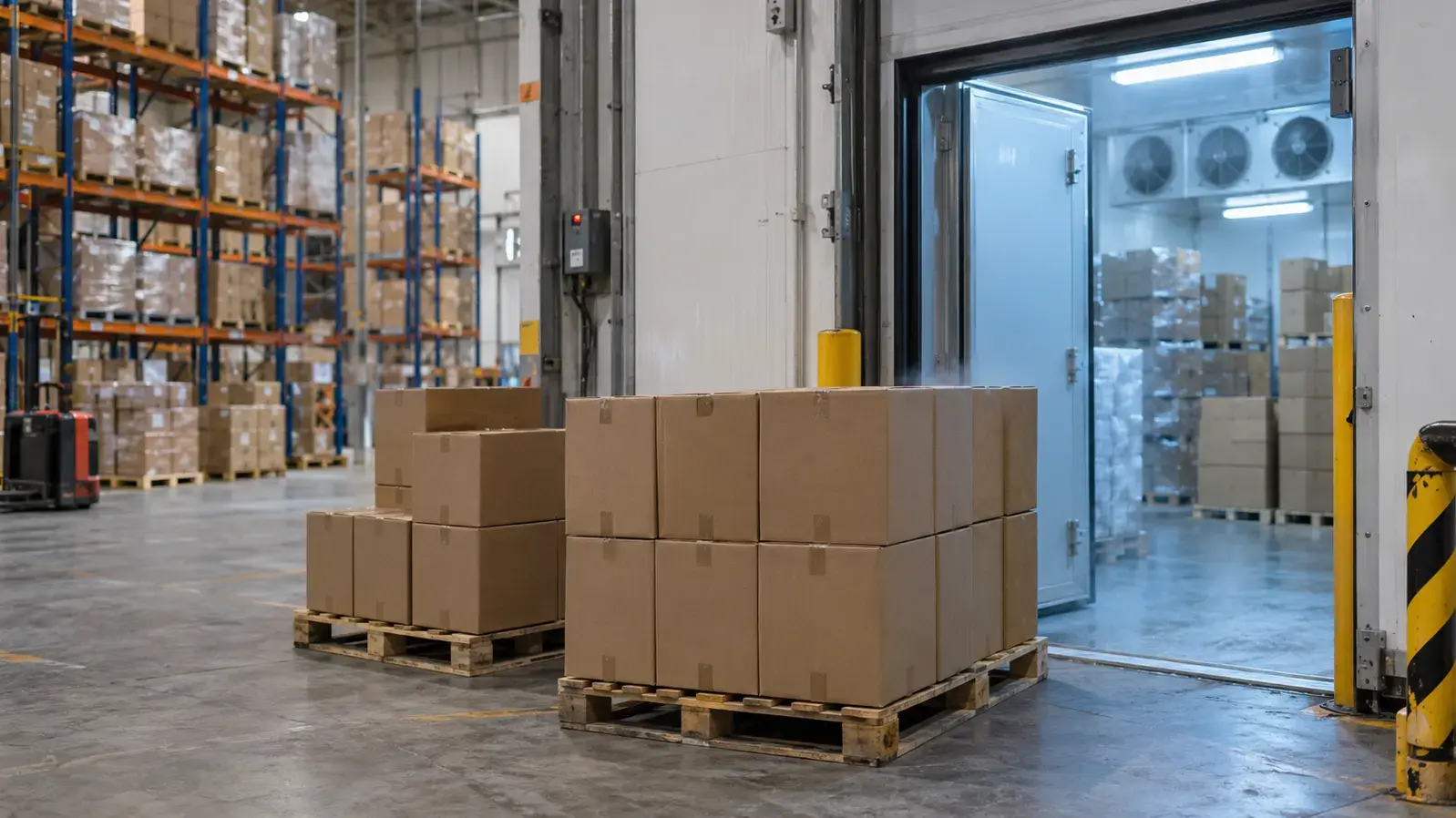
Multi-Temperature Warehousing:
Why It Matters for Food & Beverage
If you’re an FMCG retailer, you know that food or beverage ranges rarely stay simple for long. You might start with ambient products, then add chilled lines, frozen SKUs or confectionery that needs tighter control than standard dry storage. Before you’ve had a chance to adjust, your warehouse setup has to manage several storage conditions.
That is where temperature-controlled warehousing and, more specifically, multi-temperature warehousing come in. Instead of treating frozen, chilled and ambient stock as separate logistics problems, the right setup lets you manage different temperature requirements within one connected operation.
For growing food and beverage brands, this can mean fewer stock movements, better visibility and less time spent coordinating warehouses that each handle one part of the range.
What Is Multi-Temperature Warehousing?
Multi-temperature warehousing means storing products with different temperature requirements within dedicated zones in the same warehousing operation. Depending on the facility and product range, this can include frozen, chilled, ambient and climate-controlled areas for products such as confectionery.
The idea is straightforward. Your frozen stock still goes into a freezer. Chilled products still have their own controlled environment. And ambient goods are stored under the conditions appropriate to them. But you don’t necessarily need a completely different warehouse or provider for each category.
For food and beverage brands with mixed ranges, that distinction becomes increasingly useful as SKU counts grow.
A typical range might include:
- frozen foods that need to remain within the cold chain
- chilled products with tighter handling and shelf-life requirements
- shelf-stable grocery or beverage lines suited to ambient storage
- confectionery or other heat-sensitive products needing more controlled conditions
Good multi temp storage keeps those differences intact while allowing the rest of the operation to work as one.
One Product Range Can Have Several Storage Requirements
A brand is not always a “frozen business” or an “ambient business”. The logistics setup needs to follow the products rather than force the products into a warehouse model that no longer fits.
Think about a food company that starts with dry grocery and later introduces refrigerated lines. Or a beverage supplier with shelf-stable products alongside ingredients or specialty lines needing closer temperature control. Then seasonal launches change the mix again.
When each category is small, using separate providers can work. But this becomes increasing complex when stock needs to be coordinated across several locations.
Splitting Stock Creates More Hand-Offs
If frozen stock sits with one warehouse and ambient stock with another, each facility has its own inventory, workflows and dispatch schedules. Your team then needs to keep those moving parts connected.
A promotion involving products from both warehouses can mean two sets of picks, two dispatches and potentially two delivery arrangements. Changes to stock allocation or order timing need to reach everyone involved.
Keeping mixed-temperature inventory within one multi-temperature warehousing operation can remove some of those hand-offs. The individual zones are controlled separately, but the stock sits inside the same workflow.
Your Range Can Change Without Rebuilding the Warehouse Network
Food and beverage ranges move around. A frozen line may grow quickly. A new chilled product might be added for one retailer. A confectionery range might need closer environmental control during warmer months.
If your provider only handles one type of storage, every change can trigger another search for warehouse space.
Multi-temperature capacity gives you more room to change the mix within an existing operation. You can add products with different storage needs without automatically adding another logistics provider to your network.
Temperature Control Continues Beyond the Storage Rack
Putting stock into the correct zone is only one part of temperature-controlled storage. Product also moves through receival, put-away, picking, repacking and dispatch.
Those movements need to suit the product.
Receival Needs To Match the Product
Temperature-sensitive stock can arrive by refrigerated transport or reefer container, while ambient inventory may arrive through a different freight flow. The warehouse needs to know what is arriving, where it belongs and how it should move through receival.
This becomes particularly important when imported stock is involved. Frozen and chilled products may already have travelled through several stages of the cold chain before they reach the warehouse.
Connecting warehousing with international logistics can reduce the gap between inbound freight and storage, particularly when different products within the same range have different handling requirements.
Picking Mixed-Temperature Orders Needs Coordination
A retailer order does not care that one SKU came from a freezer, and another came from ambient racking. It needs the right products, quantities and delivery timing.
This impacts the role of refrigerated warehousing. The freezer or cool room cannot operate as an isolated box at the back of the building. Picking and dispatch need to account for how long temperature-sensitive product is outside its storage zone and what happens next.
If you’re supplying several product types to the same customer, having the zones within one operation makes it easier to coordinate the order before dispatch.
Better Inventory Visibility Across the Full Range
Splitting stock can also split your information.
You may have one portal for frozen inventory, another spreadsheet or system for ambient stock and a separate set of reports from your transport provider. Your team then spends time putting the picture back together.
With connected food and beverage warehousing, inventory can be managed across the range rather than warehouse by warehouse. That becomes useful when you need to check stock by SKU, batch, date, location or temperature zone.
Stock Rotation Still Needs Discipline in Every Zone
Different temperatures do not remove the usual inventory controls.
Food and beverage stock may need batch and date tracking as well as FIFO or FEFO rotation, depending on the product and customer requirements. Those controls need to remain consistent whether a pallet sits in frozen, chilled or ambient storage.
The more products and zones you add, the less practical it becomes to rely on manual knowledge of where everything is.
A warehouse management system (WMS) can provide a common view of inventory while the physical stock remains separated according to its storage needs. For your team, that means checking one operation rather than piecing together several warehouse records.
Multi-Temperature Storage Can Make Repacking Easier Too
Storage conditions are often only part of the job.
Food and beverage stock may need relabelling, date coding, promotional packing or changes to pack format before it can go to a retailer. Some frozen products may also require controlled thawback before repacking.
If the warehousing provider cannot handle this work, the product may need to leave storage, travel to another site for packing and then move again before dispatch.
That adds transport and another hand-off at exactly the point where product control is important.
With repack and thaw services connected to multi-temperature storage, relevant handling can take place within the same operation. Frozen product can move through a controlled process rather than being sent to an unrelated packing facility simply because the warehouse cannot do the work.
For promotional activity, range changes and retailer-specific requirements, having storage and handling together can also make short-notice changes easier to coordinate.
Temperature-Controlled Logistics Includes the Trip Out of the Warehouse
The correct storage zone does little good if the next stage breaks the cold chain.
For chilled and frozen products, temperature-controlled logistics needs to continue through dispatch and transport. The means the warehousing and delivery sides of the operation need to work from the same requirements.
A warehouse team may have the product correctly stored and picked, but dispatch timing still affects how long it spends outside the controlled zone. The transport provider also needs the right equipment and handling instructions.
Connecting warehouse delivery and distribution with storage gives the teams involved a clearer view of when orders will be ready and what each load needs.
This becomes particularly useful with mixed ranges. Ambient and temperature-sensitive products may be going to the same retailer or distribution network even though the physical handling requirements are different.
Quality Assurance Has To Work Across Every Temperature Zone
Food storage is not simply a question of whether the warehouse feels cold enough.
Product condition, documentation, batch information and handling records can all form part of the process from receival through to dispatch. With several storage zones operating together, those controls need to follow the stock wherever it moves.
For example, a product may be received into frozen storage, later move through controlled thawback and repacking, then be dispatched in a different format. Each stage creates information the operation needs to keep connected.
That is where quality assurance needs to sit alongside warehousing rather than function as a separate final check. The warehouse should be able to identify what happened to the stock during storage and handling without trying to reconstruct the history afterwards.
What To Look For in a Temperature-Controlled Warehousing Provider
The number of temperature zones is useful, but it does not tell you how well the operation will fit your business.
Start with your actual range. Which products need frozen, chilled or ambient storage? Are any sensitive to heat or moisture even though they are not refrigerated? Do you expect those requirements to change as the range grows?
Then look beyond the storage space itself.
Inventory and System Visibility
Ask how stock is recorded and what information you can access. If you need batch, date, SKU or location reporting, find out whether those details are available without requesting manual reports each time.
If you already use an enterprise resource planning (ERP) system, check how the warehouse will connect with it.
Handling Capability
Consider what happens when stock needs work before dispatch.
Can the provider handle relabelling or date coding? What about promotional packs? If you have frozen food, is controlled thawback available?
These jobs are easy to overlook when choosing a warehouse because they may only happen occasionally. When they do come up, sending stock to another facility can create an unnecessary operational detour.
Distribution
Ask how the provider handles chilled and frozen freight once orders leave the building. Warehousing and transport do not need to be supplied by the same company in every case, but someone needs clear responsibility for keeping the two connected.
Room for a Mixed Range
Finally, look at what happens if your product mix changes.
A warehouse may suit the range you have now but leave you looking for another provider as soon as you introduce a new storage category. If growth is likely to bring more SKUs and different temperature requirements, choosing temperature-controlled warehousing with broader capability can give you more flexibility from the start.
Managing Multi-Temperature Warehousing With Pakval
Pakval provides multi-temperature third-party logistics (3PL) warehousing for food, beverage and FMCG brands, with facilities in Melbourne, Sydney, Brisbane and Adelaide. Our warehousing services cover frozen, chilled and ambient inventory, with additional temperature-controlled capability available for suitable products and locations.
The operation also connects warehousing with delivery, repack and thaw, international logistics and quality assurance, so brands can manage more of the product journey through one provider rather than building a separate supplier relationship around each task.
If your range already crosses several temperature categories, or you expect it to as you grow, speak to Pakval about your warehousing needs.
Frequently Asked Questions
Can temperature-controlled storage be used for wine?
Yes, some wines can benefit from storage where temperature fluctuations are controlled. The right setup depends on the product, packaging, expected storage period and conditions specified by the producer. If wine forms part of your FMCG range, ask whether your warehousing provider can handle it alongside your other stock rather than assuming standard ambient storage is suitable.
Can a 3PL store both food and non-food FMCG products?
Potentially. A 3PL may work with several FMCG categories, but the products still need to suit the facility, handling processes and any relevant storage requirements. If your range includes food alongside non-food goods such as household or personal-care products, give the provider a full SKU profile before deciding on the setup.
How early should I arrange cold storage for a new product launch?
Start discussions before the first inbound shipment is booked. Your provider will need information about expected volumes, pallet configuration, storage temperature, inbound timing, order profile and distribution requirements. An early conversation also gives you time to work through system setup, product data and any packing or labelling work needed before launch.
Can seasonal products use temperature-controlled storage for only part of the year?
They can, subject to the provider’s available capacity and commercial arrangements. This can suit products whose storage needs change with seasonal demand or brands that only carry certain ranges for part of the year. Forecasting expected pallet volumes and timing gives the warehouse a better chance to plan space around the peak.
What information does a warehouse need before quoting for multi-temperature storage?
Expect to provide more than a total pallet count. A useful starting point includes the number of SKUs, pallet volumes by temperature requirement, expected inbound and outbound activity, order profile, product dimensions, handling requirements and any repacking or distribution needs. This helps the provider price the operation around how your stock will move rather than storage space alone.